
2024-2025 Season: Submerged
Updated: May 7
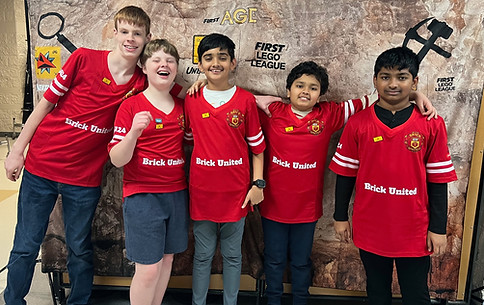
Participating in the First Lego League (FLL) is not just about building robots; it's about building a team. This journey has taught us valuable lessons in collaboration, creativity, and problem-solving. As we reflect on our experiences, we hope to inspire others to embrace teamwork in their own FLL adventures. During the SUBMERGED℠ Season, FIRST LEGO League teams will use creative thinking and LEGO® technology to explore the layers of the ocean and bring their learnings and ideas to the surface as they “sea” into the future.
Understanding the First Lego League
The First Lego League is an international competition that combines science, technology, engineering, and mathematics (STEM) with the fun of building Lego robots. Teams of students work together to design, build, and program a robot that can complete specific tasks. The competition also includes a research project - the Innovation Project - where teams present their findings on a chosen topic.
The Importance of Teamwork
Teamwork is at the heart of the FLL experience. Each member brings unique skills and perspectives, which can lead to innovative solutions. Here are some key reasons why teamwork is essential:
Diverse Skill Sets: Each team member may excel in different areas, such as programming, design, or research. This diversity allows the team to tackle challenges from multiple angles.
Shared Responsibility: Working as a team means sharing the workload. This can reduce stress and help ensure that no one person feels overwhelmed.
Enhanced Creativity: Collaborating with others can spark new ideas and approaches that an individual might not have considered.
Our Team Formation
When we first formed our team, we were a mix of friends but were in school in different cities, each with varying levels of experience in robotics. To ensure a successful collaboration, we focused on establishing clear roles and responsibilities, which as a small group of 3 members, meant we all had to do research, presentation, robot design and coding!
Robot Design
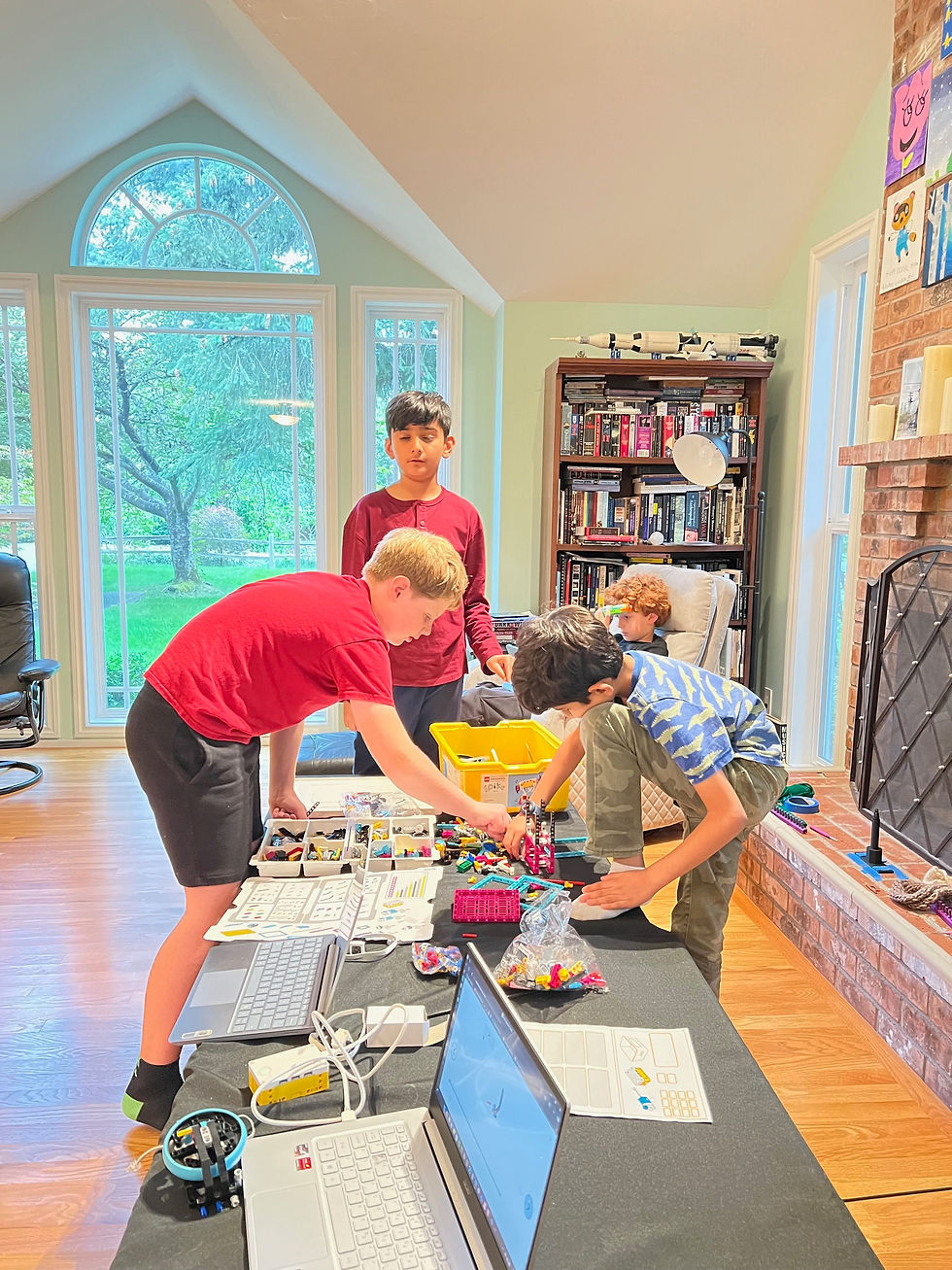
The robot-building phase was both exciting and challenging. We spent countless hours brainstorming ideas, sketching designs, and experimenting with different Lego pieces.
Design Process & Attachments
Our design process involved several steps:
Brainstorming: We gathered ideas from each team member and discussed potential designs.
Prototyping: We built several prototypes to test different functionalities.
Testing: Each prototype was tested to see how well it performed the required tasks.
Design challenges and solutions:
Weight in the back so it doesn’t tip in the front when we stop
Arms are designed to do multiple missions at once
For clean up crew we needed arms that collected objects so there was something on the side but also something that came down to trap the items.
For Submersible, we have an arm design to do that one, but the robot is placed in a new area, a new code is run and it does the radar (or whales). In the very beginning when we were first trying challenges, our robot was too big, so we changed the entire body so it was smaller and fit into spaces better. It also turns out Clean Up Crew #2 wasted time because it took too long to put on the top arm and side arms for only a potential 5 points of collecting the coral. We decided to replace it with a different mission where we would get more points in less time.
We had trouble with the angler fish attachment we used and it got the whole robot stuck instead of gaining us points. We stopped working on that to focus on the coral reef because it was more reliable with our robot.
As a rookie team, we decided to focus on specific missions rather than all of them. First we wanted to find arms that work for multiple missions. In doing so, we found that we needed to change the body of the robot multiple times because it was not slim to fit most missions. We also needed more weight in the back because it was tipping when it stopped.
In the final week of preparing for competition, we were still changing code. We focused on running the game over and over while timing it as well as taking notes on what missions succeed and which ones failed.
The Wednesday before competition, most things went wrong. The variables didn’t change, but the robot didn’t do what it did the day before. We spent the whole time recoding because we did not know what else to do.
Programming the Robot
3 code challenges and solutions:
After a full evening of test runs, we changed one code for the whale mission. The next session, it didn’t work at all. The rotations were too big, going all the way around, instead of what we though we programmed into the code. We redid the code for it.
When working on the whale mission, we changed the original code by 2 degrees and it made all the difference. That is how specific the code needs to be.
The first times we worked with the submersible code, it worked fine every time. When we used the app instead of the browser to code, it did not work. We had to recode the entire thing multiple times to get it to work. Changed how hard the arm pulled up and how far the robot went toward the mission
Innovation Project
In addition to building the robot, we also had to prepare for our project presentation. This involved researching our chosen topic and creating a compelling presentation. The year's theme was about exploring under water ecosystems.
Researching Our Topic
We selected a topic related to environmental sustainability, which resonated with all team members. Our research involved:
Gathering data from credible sources.
Developing practical solutions that could be implemented
80% of the ocean has not been explored. Our robot is here to explore the Hadal zone of the ocean. There is an AUV called Orpheus that has been to the Hadal zone. It has lights, batteries, cameras, a robot arm, and plots its movement using vision-based navigation.
There are some challenges to work with at the very bottom of the ocean:
It’s too deep for humans to go down, there’s too much pressure. Our robot’s exterior is made of titanium and carbon fiber, which is a softer material than other metals. Softer materials will be less likely to break or crack at those pressures.
It’s too cold down there for humans. We have insulated batteries inside our robot so they don’t freeze. We have them installed next to the propellers so the batteries stay warm.
You can't see in the Hadal zone so our cameras have lights above them. If the lights fail, the cameras have a night vision setting that will automatically turn on. Some military operations use this, so that technology already exists.
There is a volume challenge with collecting samples. The belly of our robot is large so it can hold many small samples of sand, rocks and animals or plants that may not have been discovered yet. Our scale model is 1mm to 1 inch, so the length of the body is 90 inches and the width is about 52 inches.
Since this project is likely to cost many millions of dollars, if we find trash at the bottom of the ocean, our AUV can collect it and store it in a different section of the body. It is important to collect the trash so it does not affect the Hadal Zone.


Competition!
The day of the competition arrived, and we were filled with excitement and nerves. We had put in countless hours of work, and now it was time to showcase our efforts.
The Robot Challenge
During the robot challenge, we faced unexpected obstacles. Some tasks did not go as planned, but we remained calm and adapted our strategy on the fly. This experience reinforced the importance of teamwork and communication under pressure.


Comments